



Porsche G by Antoine Dufilho: when two sequences merge into a single sculpture
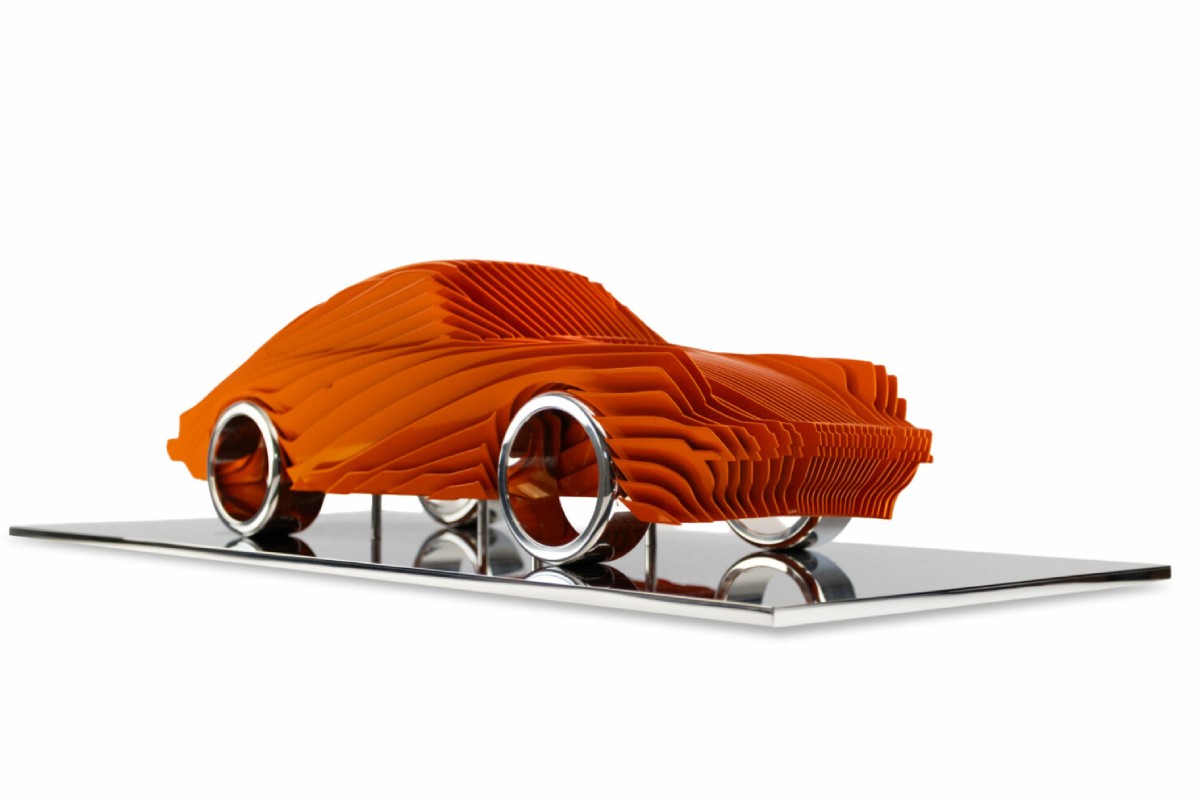
Since 2016 and his first interpretation of the Porsche 356, Antoine Dufilho has maintained a constant dialogue with the Stuttgart-based brand. Each new Porsche model in his catalog is an opportunity for technical experimentation. With the Porsche G, the artist goes one step further by merging two different plate sequences into a single sculpture for the first time. Dressed in a vintage orange finish that anchors the work in the spirit of the 70s, this piece marks a significant evolution in Dufilho’s artistic vocabulary.
A new technique in Dufilho’s work
Two sequences, one object: a first
Each technique developed by Antoine Dufilho is based on a specific arrangement of metal plates. The Streamline arranges them lengthwise to evoke the wind tunnel. The Solaire technique, inaugurated with the Porsche 993, features two sets of plates that fit together without touching, like two cooperating gears. The asymmetrical technique, first tested on the 356 Asymétrique and then developed on the Porsche 901, plays on imbalance to create the illusion of movement.
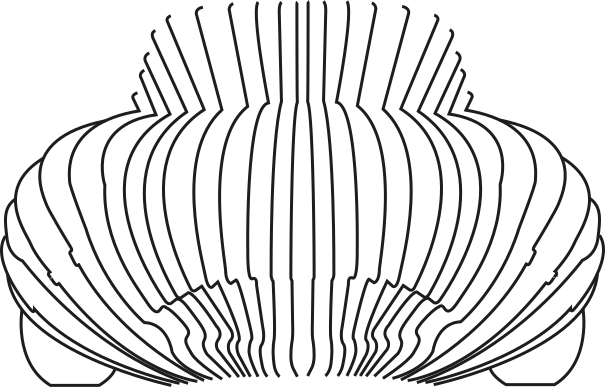
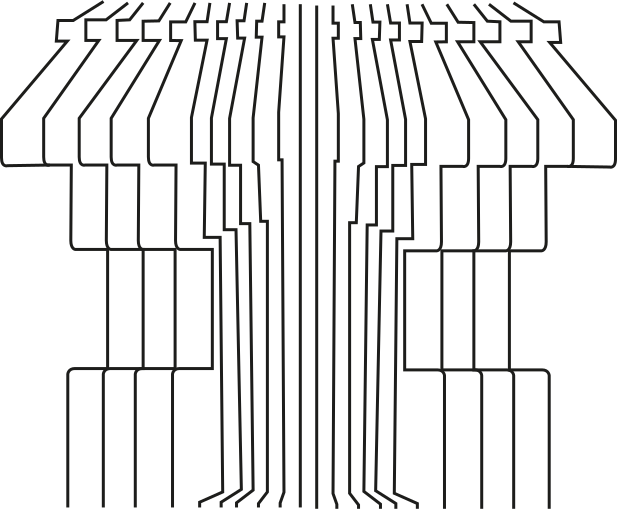
With the Porsche G, Antoine Dufilho combines two of these sequences in a single sculpture for the first time. This fusion creates a visual dialogue between two different construction logics that coexist and respond to each other on the same object. The result amplifies the artist’s characteristic kinetic effect: depending on the angle of observation, the viewer perceives one sequence, the other or their interaction.
What this innovation changes in the artist’s approach
Until now, each of Antoine Dufilho’s sculptures explored a unique technique. The Streamline of the Ferrari 250 GTO, the Solaire of the 993, the asymmetry of the 356 were closed systems applied to the whole piece. With the Porsche G, the artist opens up a new avenue: that of technical hybridization. This approach considerably expands future expressive possibilities, and could foreshadow other unprecedented combinations in future creations.
The Porsche 911 Type G: queen of the 1970s and 1980s
The longest career of any 911 generation
The Porsche 911 Type G, or G Series, is the second generation of the 911. Produced from 1973 to 1989, it holds the longevity record for all generations of the model, with 198,496 units rolling off the Zuffenhausen lines in sixteen years. Its visual distinguishing features include gusseted bumpers designed to meet US safety standards, a front hood shorter than that of the original generation, and a red rear strip linking the two lights.
The G series spawned some of the most legendary models in Porsche history. The 930 Turbo, introduced in 1974 with its 260 hp turbocharged flat-6 and whale-tail fin, became the brand’s spearhead. Increased to 300 hp with the 3.3-liter in 1978, it accelerated from 0 to 100 km/h in 5.5 seconds. The Carrera 3.2, the first production Cabriolet (1982) and the 1989 Speedster were all milestones that forged the legend.
Vintage orange: anchored in the times
Antoine Dufilho chose an orange finish for this sculpture, a color that immediately anchors the work in the aesthetics of the 70s. This chromatic choice is not insignificant in the artist’s catalog. Orange is also found on his Lamborghini Miura, also emblematic of the decade. The hue recalls the Porsche catalogs of the time, when 911s were readily displayed in warm tones: orange, olive green, copper brown.
This consistency between the model represented and its finish testifies to the artist’s attention to the historical context of each vehicle. Each sculpture is part of an era, and the chosen palette plays a full part in this visual narrative.
Porsche and Dufilho: ten models, ten experiments
From the pioneering 356 to the 993 Solaire
Antoine Dufilho’s relationship with Porsche is one of the richest threads running through his work. The Porsche 356, created in 2017, was his first longitudinal sculpture. It then evolved into the 356 Asymétrique in 2023, inaugurating the concept of kinetic imbalance. The 901 continued the exploration with its tightly packed front plates that gradually spread out, forming sharp blades along the body.
The 930 Turbo, made of stainless steel tubes in 2020, explored an entirely different path: that of honeycomb transparency. The Gunmetal Symphony, a monumental 4.30 m high, represents a 911 on the same principle. Then, in 2023, the 993 inaugurated the Solaire technique, with its two sets of interlocking plates. The series continues to grow with the Targa, GTS, Carrera 4S and Streamline 992 Sport Classic.
Every generation of 911, a new technical challenge
With the Porsche G, Antoine Dufilho adds a tenth Porsche model to his catalog and, above all, a major technical innovation. The progression is remarkable: from the transverse cut of the first sculptures to the longitudinal plates of the Streamline, then the Solaire, asymmetry and now the fusion of sequences, each Porsche has served as a field of experimentation.
This special relationship between artist and brand is echoed in the very history of Porsche, whose 911 has always been a vehicle for incremental innovation. Like the engineers in Stuttgart who have been developing the 911 since 1963 while preserving its identity, Antoine Dufilho is developing his sculptural vocabulary through this iconic model, without ever losing sight of what underpins his art: the search for movement in immobile metal. All the artist’s Porsches can be seen in his galleries.